


A Retreat Host Success Story in Rural Portugal

The most memorable retreat host success story rarely begins with a packed itinerary. It begins when guests arrive, put their mobile phones down without being asked, and realise there is nowhere else they need to be. The river is below, forest surrounds them, dinner is being prepared, and the next few days have room to breathe.
For retreat leaders, that feeling is not simply beautiful. It is the foundation of a programme people trust, talk about and return to. A successful retreat is not measured only in sold places. It is measured in the ease guests feel, the depth of connection they make and the confidence a host gains to run the next one.
A retreat host success story starts before the first session
Consider the experience of a wellness host bringing a small group to central Portugal for a five-night renewal retreat. Their intention is clear: offer daily movement, nourishing food, honest conversation and time in nature. Yet intention alone cannot carry a retreat. The setting has to support it.
At Quinta do Rabaçal, guests can settle into restored rural houses rather than anonymous bedrooms in a busy hotel. There are proper kitchens, comfortable beds, central heating for cooler evenings and wood-burning stoves for cosy nights around the fire. Private terraces and peaceful ensuites give people space to retreat from the group when they need to.
That balance matters. Some guests arrive hoping to meet new people; others are exhausted by constant sociability and need quiet before they can participate fully. A well-hosted retreat makes room for both. The host does not need to manufacture intimacy every hour because the rhythm of the place does some of that work naturally.
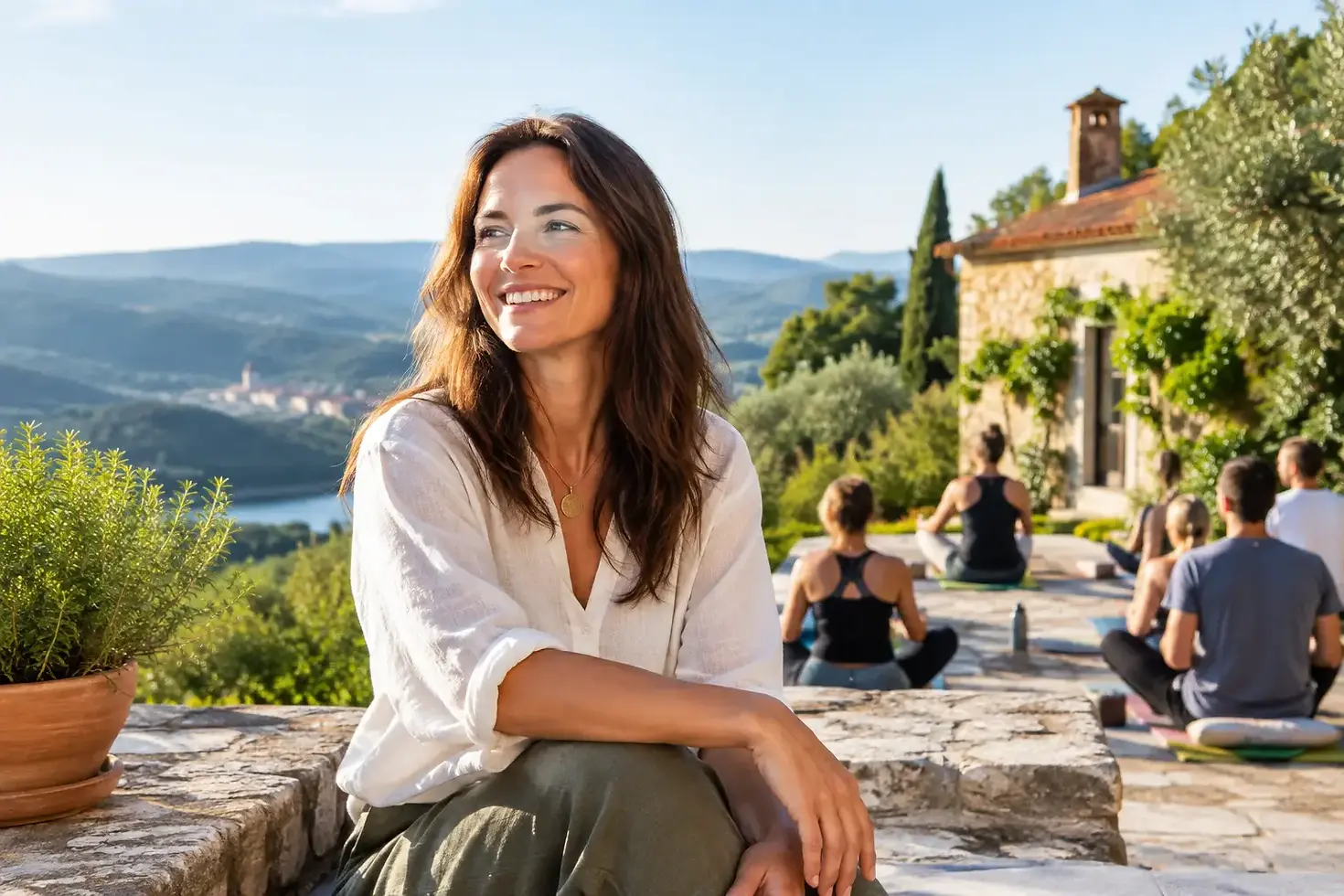
The group gathers for morning yoga, perhaps in the dedicated practice area as light moves across the valley. Afterwards, there is no rush to leave the property or find a suitable place to sit together. Breakfast can linger. A conversation that began over tea can become the moment someone finally says what they came to work through.
The setting does not replace good hosting
Privacy, comfort and striking landscape are powerful ingredients, but they are not a substitute for leadership. The strongest hosts bring a clear point of view. They understand who their retreat is for, what guests can realistically expect and what they want participants to carry home.
For this host, success came from resisting the temptation to fill every gap. The programme included movement, a guided walk by the Mondego River, a practical workshop and an evening circle, but afternoons remained open. Some guests swam in the infinity pool. Others used the outdoor jacuzzi, read on a stone terrace or took a nap. One or two chose the gym. Nobody was made to feel they were doing the retreat incorrectly.
That freedom is particularly valuable for premium small-group retreats. Guests who have invested in meaningful time away do not want to be processed through activities. They want thoughtful guidance alongside enough autonomy to listen to themselves.
A schedule with space earns trust
There is a trade-off. A lighter programme can make an inexperienced host nervous, especially when they worry guests expect constant value. But value is not the same as volume. Over-programming can leave people depleted, late for meals and too distracted to absorb what they have learned.
A good rule is to give each day one clear centre of gravity. It might be a longer practice, a river walk, a guest teacher session or a shared meal with a particular theme. Everything else should serve that central experience rather than compete with it.
The off-grid nature of the property can support this intention beautifully. Green energy, forest, river beaches and farm-grown food are not decorative details. They invite a different pace. Still, hosts should communicate the setting clearly before arrival. Guests need to know they are coming to pristine wilderness with high comfort, not a conventional resort with a shop and café around every corner.
Comfort makes transformation more possible
There is a persistent idea that a meaningful retreat must involve roughing it. For some adventure-led groups, that may be part of the appeal. For many wellness, fitness and renewal retreats, however, dependable comfort allows participants to go further emotionally and physically.
A guest who sleeps well is more present in a morning session. A warm shower after a cool river dip changes the experience. A generous kitchen and inviting dining space make shared food feel like part of the retreat, rather than an operational inconvenience. When temperatures fall, central heating and a fire offer reassurance without breaking the sense of connection to place.
This is where a host’s reputation is often won. Not through grand promises, but through details handled well: enough towels, clear room arrangements, nourishing meals, time to settle in and a plan for changing weather. Guests may not mention every practical choice in their feedback, but they notice the overall feeling of being cared for.
The group became part of the story
By the third day, the host noticed a shift. People who had arrived cautiously were lingering after meals. A guest who had planned to work between sessions had closed their laptop. Two strangers arranged to share an early walk to the river. The scheduled activities still mattered, but the group’s unplanned moments became just as valuable.
This is why exclusive use of a retreat venue can be so transformative for small groups. There is no competing crowd at breakfast, no strangers beside the pool and no pressure to protect the atmosphere from the noise of a public resort. The group can be fully itself.
That privacy also helps hosts lead with more confidence. They can adapt a session when the weather changes, move a conversation outdoors or let dinner run long without worrying about other guests. The property becomes a container for the programme, not a backdrop that must be negotiated around.
What made this retreat commercially successful
The retreat filled through a combination of existing community and clear communication. The host did not try to appeal to everyone. Their messaging spoke to people who wanted restorative movement, nature and a smaller, more personal experience in Portugal.
Importantly, they described the retreat honestly. It was not positioned as a luxury spa break, nor as an austere boot camp. It was a chance to step out of daily noise, spend time in a beautiful rural setting and reconnect with the body, landscape and other people. That precision attracted guests who were a good fit.
Commercial success also depended on practical planning. The host set a realistic minimum group size, built accommodation and catering costs into the price, and allowed enough margin for their preparation and leadership. A retreat can be soulful and financially sound at the same time. In fact, one supports the other: a fairly paid host can give their attention to the guest experience rather than carrying unnecessary stress throughout the week.
Not every group needs the same format. A yoga teacher may want long mornings and gentle afternoons. A fitness coach may need more structured training time and recovery facilities. A digital detox facilitator may prioritise device-free rituals and walks, while a leadership group may require quiet places for conversation and focused work. The venue should flex around the programme, but the host should know which elements are non-negotiable.
The real measure of a successful retreat
At the end of the stay, no one needed persuading that the retreat had been worthwhile. Guests spoke about sleeping deeply, feeling lighter and remembering how good it felt to eat, move and talk without rushing. Several asked when the host would return. That is the clearest sign of a retreat host success story: not a perfect schedule, but a group that leaves changed enough to want more.
For a retreat leader, the most valuable outcome may be the confidence to host again with greater clarity. Choose a setting that protects the experience, plan with care, leave room for the unexpected and let the river, forest and quiet do what they do best. The right guests will feel the difference long before they find the words for it.


Comments