


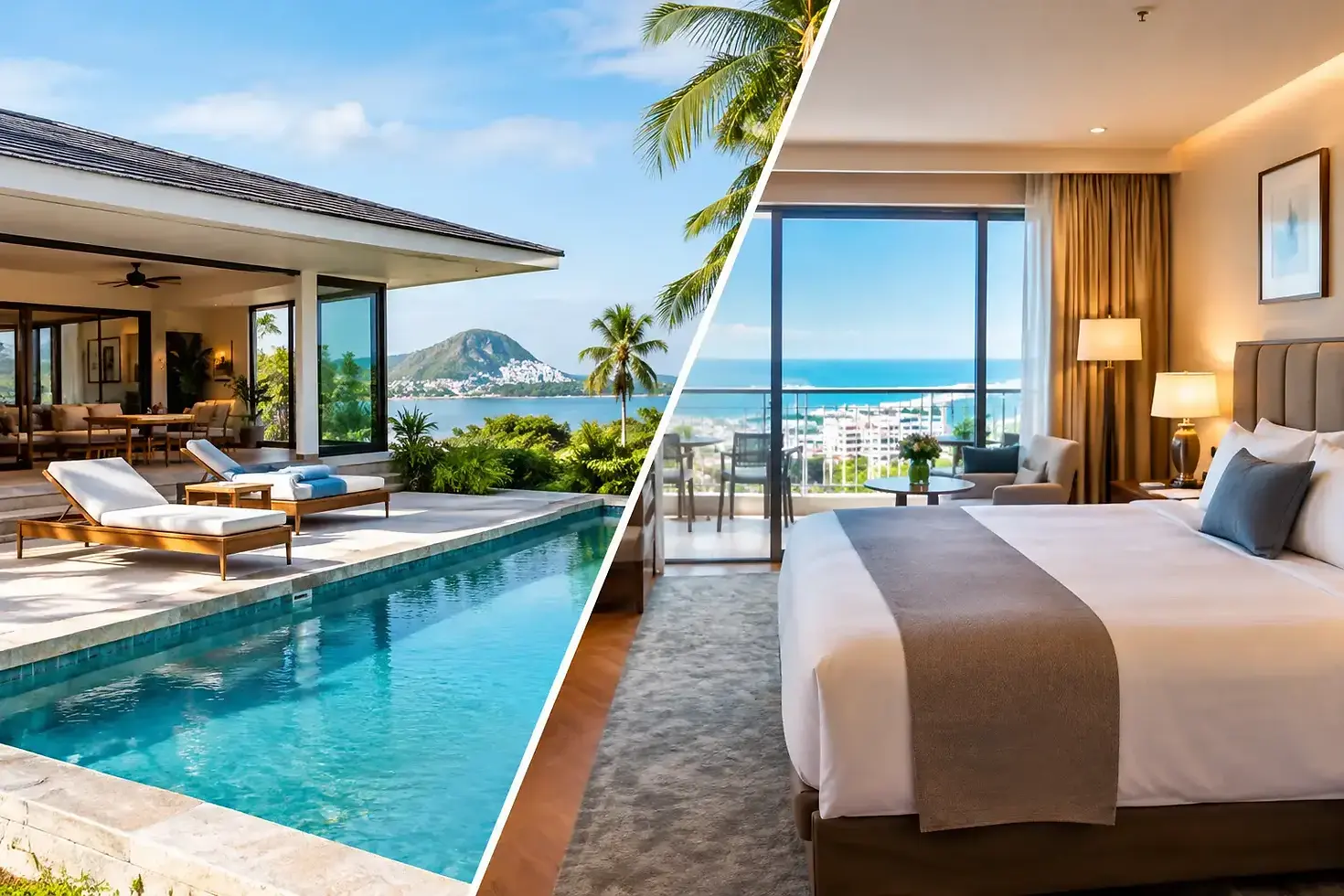
Villas Versus Hotels: Which Stay Feels Better?

A hotel room can be the right answer for a night in the city, when you want to step out for dinner and leave the details to someone else. But for a holiday shaped around unhurried mornings, shared meals, wild swimming and time that genuinely feels your own, the question of villas versus hotels becomes far more interesting.
The difference is not simply about the number of bedrooms or whether breakfast is included. It is about the rhythm of the stay. Hotels are designed around service, convenience and a shared atmosphere. Villas offer a more private base, where your group can settle in, follow its own schedule and enjoy a destination without constantly being among other guests.
For travellers drawn to central Portugal's quieter landscapes, the better choice depends on what you hope to carry home with you: a well-serviced break, perhaps, or the rare feeling of having a beautiful place almost to yourselves.
Villas versus hotels: the real differences
Hotels have an ease that is hard to deny. Reception is there to answer questions, rooms are refreshed, and breakfast may be waiting downstairs before you have fully woken up. For solo travellers, short stays, city breaks and guests who prefer every decision to be made for them, this can feel wonderfully light.
A villa holiday asks a little more of you, but gives much more room in return. Instead of meeting friends in a lobby, you gather in a kitchen while coffee brews. Instead of coordinating everyone around restaurant bookings, you can linger over a long lunch on the terrace. Children can nap in a separate room while adults read by the pool. Early risers can walk, stretch or work without waking the rest of the house.
That freedom is especially valuable when travelling as a family or group. A hotel may offer adjoining rooms, but the experience is still divided into separate spaces. In a villa, the shared areas are part of the holiday itself: the sitting room, the garden, the outdoor table, the fire and the view at the end of the day.
Privacy changes the whole experience
Privacy is often the decisive factor. In a hotel, even a beautifully designed one, you share corridors, pools, breakfast rooms and common areas. There may be music from the bar, loungers claimed at dawn, or the gentle but constant awareness of other people’s plans.
In a private house, silence can return. You can take a late swim, read without a soundtrack, eat when hunger arrives and sit outdoors long after dinner without wondering whether you are keeping anyone awake. For couples, this can create a more intimate escape. For friends, it makes space for the kind of conversation that rarely happens in busy public settings. For families, it can mean fewer compromises and less logistical strain.
Privacy also matters for meaningful occasions. A birthday weekend, small celebration or reunion deserves more than a table reservation and a collection of rooms on different floors. Having a house, or an entire property, gives the gathering a centre of its own.
Of course, complete seclusion is not for everyone. Some guests enjoy the sociability of a hotel bar, organised excursions and the comfort of seeing staff close at hand. If your ideal break involves meeting fellow travellers or spending most days in a lively town, a hotel may better suit the mood. The key is to choose the atmosphere you want, rather than treating privacy as an automatic luxury upgrade.
Space is more than square footage
The practical advantages of a villa become clear after the first day. Hotel rooms can feel polished and restful, but they are rarely built for living in. There may be no proper place to prepare food, dry walking clothes, play a game, take a private call or spend a rainy afternoon together.
A well-equipped villa gives each part of the day somewhere to happen. Bedrooms offer genuine rest; a full kitchen makes breakfasts and relaxed suppers possible; terraces invite slow mornings and sunset drinks. Central heating and a wood-burning stove can make cooler evenings feel especially cosy, while comfortable beds ensure that time in nature is balanced by proper restoration.
This matters for longer stays. After three or four days, even the most appealing hotel room can begin to feel temporary. A house can feel like a home in the landscape. You can shop locally, cook something simple, leave your book where you stopped reading and establish a rhythm that does not depend on opening hours.
For remote workers and nomadic travellers, that extra room can be equally valuable. A tranquil setting supports focused work, while the ability to close a laptop and walk into woodland, swim or exercise creates a healthier boundary than working from a bed or crowded café.
Service versus self-direction
The most honest comparison between villas and hotels comes down to service. Hotels are built around it. Daily housekeeping, room service, a concierge and an on-site restaurant reduce effort. If you are celebrating for one night, arriving late, or want every meal and activity arranged for you, that simplicity has real value.
Villas lean towards self-direction. You decide when breakfast happens, what is on the table and whether the day holds an adventure or absolutely nothing at all. Self-catering is not about sacrificing quality. It is about choosing your own pace, with the comfort and equipment to do it well.
The best villa stays bridge the gap. They retain the independence of a private home while offering considered facilities that make the stay feel cared for: a pool for quiet afternoons, a jacuzzi beneath the stars, spaces for yoga or training, generous outdoor dining and thoughtful local guidance when it is wanted.
At Quinta do Rabaçal, restored rural houses combine this freedom with high-comfort details, from full kitchens and warm interiors to private outdoor space. The setting does not ask guests to choose between the raw beauty of the countryside and a genuinely comfortable night’s sleep.
Hotels and villas serve different kinds of travel
A hotel is often the natural choice when location is everything. If you are visiting Lisbon or Porto for a short cultural break, want museums and restaurants on your doorstep, or are travelling alone and value the reassurance of a staffed building, a good hotel keeps the experience simple.
A villa becomes more compelling when the destination itself is the point. In rural Portugal, days tend to expand. A morning hike can lead to a river swim; lunch can become an afternoon in the shade; a clear night sky can keep everyone outdoors longer than planned. These are not experiences that fit neatly around a breakfast service or a checkout queue.
Wellness travel is another clear example. A hotel spa can be restorative, but a private natural setting allows renewal to continue between treatments or classes. You can move from yoga to a quiet walk, from a nourishing meal to a nap, without re-entering the pace of a public resort. For retreat groups, exclusive use also creates the trust and focus needed for people to relax into the programme.
The value question is not always obvious
At first glance, hotels can appear cheaper because the nightly rate is easy to compare. Yet this can be misleading for families and groups. Multiple hotel rooms, restaurant meals, drinks, laundry and separate activity costs can quickly add up. A villa's upfront price may cover far more usable space and allow costs to be shared across the group.
There is also value in time. Cooking a simple supper together can be more memorable than another meal out. Having a pool or river nearby may remove the need for a daily excursion. And when everyone can stay in one place comfortably, there is less time spent coordinating and more time actually being on holiday.
Still, price should not be reduced to arithmetic. A hotel’s service may be worth every penny when rest means not lifting a finger. A villa is likely to offer better value when your group wants privacy, shared living and enough time to inhabit the destination rather than merely visit it.
Choosing the stay that suits your plans
Ask a few straightforward questions before booking. Do you want to be looked after minute by minute, or do you want room to make the days up as you go? Are you travelling for a city, or for a landscape? Will you spend more time out exploring than gathered together at home? And does your group need separate rooms, or shared spaces that bring everyone together?
If the answer is a short, sociable, service-led break, a hotel may be exactly right. If you are longing for a place to slow down, cook, swim, reconnect and sleep deeply in the countryside, a villa can offer something harder to find: not just accommodation, but a private rhythm for the days ahead.
Choose the setting that gives your holiday the kind of space you have been missing, then leave enough room in the itinerary for the unexpected pleasures of simply being there.


Comments