


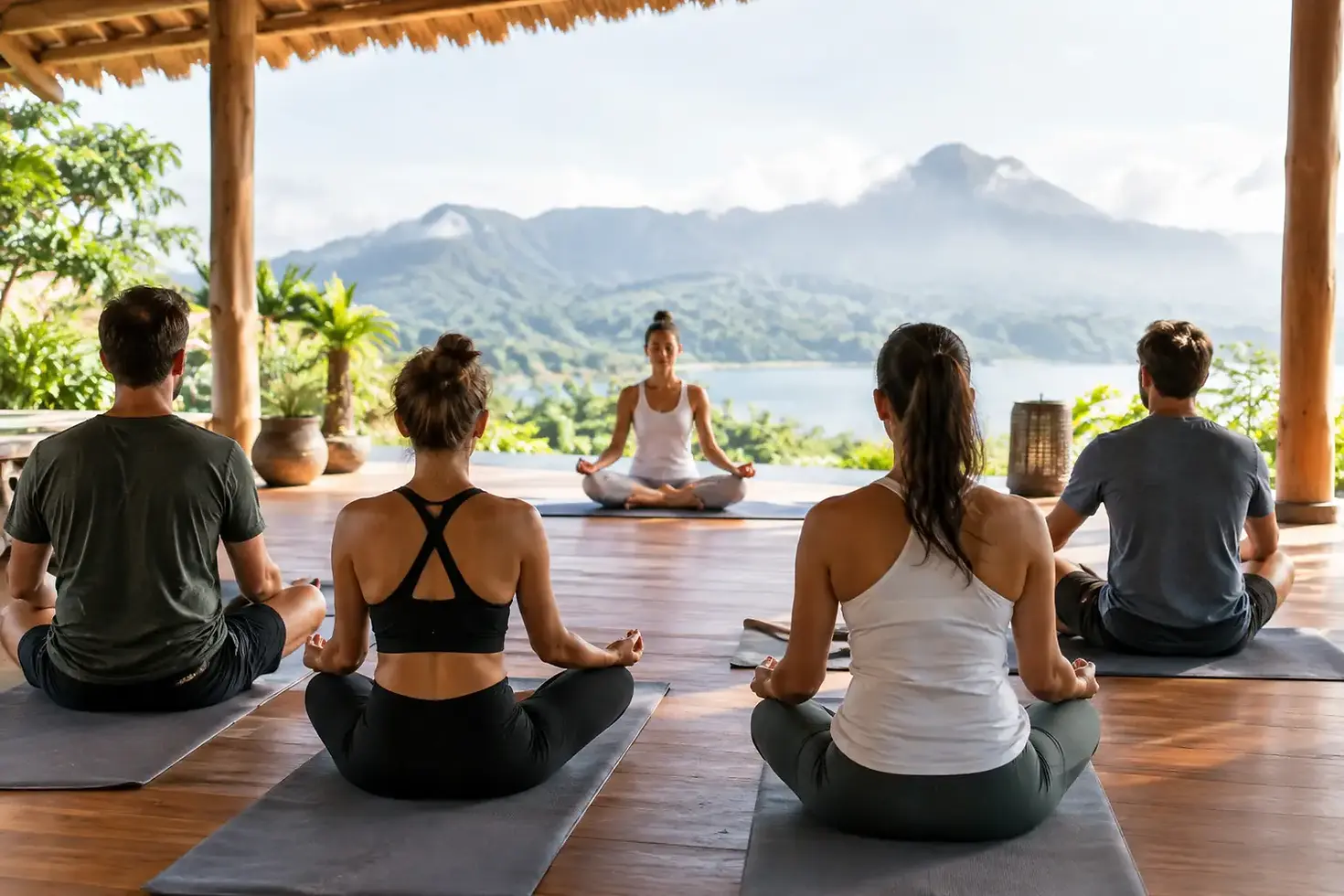
Yoga Venues That Hold a Retreat Beautifully

A yoga retreat can be transformed by the first ten minutes of the morning: bare feet on a warm floor, the hush before the practice begins, and a view that asks for nothing except attention. The best yoga venues make space for that feeling, not just for the class itself. They allow guests to slow down between sessions, eat well, sleep deeply and feel held by their surroundings.
For retreat leaders, choosing a venue is also an act of care. The setting shapes how easily people arrive in their bodies, how the group connects, and whether the programme has room to breathe. A beautiful studio matters, but it is only one part of the experience.
What makes a yoga venue truly restorative?
A yoga space does not need to be vast or overly designed to feel special. In fact, the most memorable settings often have a sense of proportion: enough room for a group to move comfortably, natural light where possible, a calm visual backdrop and the quiet needed for guided meditation or savasana.
Yet the room is only the beginning. Yoga venues work best when the journey from waking to resting feels considered. Guests should be able to step out of practice into fresh air, find a peaceful corner with a book, or gather for a nourishing meal without immediately returning to the noise and pace they came to leave behind.
Privacy is equally valuable. A shared hotel conference space may be convenient, but it can dilute the intimacy of a retreat. When a group has a place entirely to itself, participants tend to settle more quickly. Conversations deepen over dinner, silence feels comfortable, and the retreat develops its own gentle rhythm.
Nature creates the space between practices
A strong retreat itinerary has moments of structure and moments of spaciousness. Morning movement, workshops, walks, meals and evening reflection all have their place, but no guest wants to feel shepherded from one activity to the next. The landscape around a venue can provide the pause that makes the programme feel generous rather than crowded.
Forest paths, riverside walks, open terraces and places to sit in the sun are not simply scenic additions. They invite guests to integrate what they are learning on the mat. A quiet walk after breathwork can be as meaningful as another session. A swim, a journal entry or an unplanned conversation beneath the trees can become the moment someone remembers most.
This is why secluded rural settings suit yoga so naturally. They remove much of the background demand of ordinary life: traffic, schedules, crowded streets and constant notifications. Off-grid does not have to mean roughing it. At its best, it means a more deliberate relationship with energy, food, water and the natural world, while still offering the warmth, bedding and facilities that make guests feel genuinely comfortable.
Comfort is part of the practice
There is a persistent idea that retreat travel should involve a degree of discomfort. A basic mattress, chilly shared bathrooms or limited food may be presented as an opportunity to simplify. For some programmes, that choice can be intentional. For most guests, however, physical ease supports emotional openness.
Comfortable beds, well-heated rooms and inviting bathrooms help people rest after active days. Self-catering kitchens can be particularly useful for groups with individual dietary needs, while a dedicated dining area makes meals feel communal rather than logistical. A wood-burning stove, a private terrace or an ensuite bathroom may seem like small details, but they give guests a sense of refuge.
This does not make a retreat less authentic. It makes it more sustainable for the people attending. When guests are warm, well-fed and sleeping properly, they have more capacity for reflection, movement and connection.
The practical details retreat leaders should examine
Before falling in love with photographs, consider how the venue will hold the full shape of your retreat. Ask whether the accommodation suits the group you hope to host, including room configurations and shared versus private facilities. Think about how people will move between bedrooms, the yoga area, dining spaces and outdoor gathering points, especially if weather changes.
It is also wise to clarify what is included in the practice space. Mats, blocks, bolsters, blankets, sound equipment and reliable lighting can affect both your planning and your guests' experience. Some hosts prefer to bring their own props for consistency; others value a venue that already has the essentials in place. Neither approach is wrong, but it should be clear well before arrival.
Finally, look beyond yoga alone. A pool, outdoor jacuzzi, gym or river beach may not be central to the programme, yet these facilities create choice. One guest may want a restorative float after a yin class, while another may take an early run or strength session. A thoughtful venue allows people to meet their own needs without pulling the group apart.
Yoga venues need room for connection and quiet
A retreat group is made of individuals arriving with different energies. Some come with friends; others come alone and quietly hope to meet like-minded people. The most successful yoga venues allow for both connection and solitude.
Shared terraces, long dining tables and fireside seating offer natural places to talk without forcing interaction. At the same time, private bedrooms, peaceful corners and open land give guests permission to step away. This balance is especially important on longer retreats, when even sociable groups need time to reset.
Retreat leaders can support this by designing a light-touch schedule. Leave an afternoon open. Offer a guided walk, but make it optional. Make clear that participation is welcomed, never demanded. The venue should make this flexibility easy, with enough on-site interest that unscheduled time still feels rich.
A setting with a sense of place
Generic luxury can look polished, but it rarely stays with people. A rural property with history, local materials and a genuine relationship to its surroundings gives a retreat emotional texture. Restored stone, old terraces, orchard produce and the changing sounds of a river create a feeling that cannot be replicated in a purpose-built wellness complex.
For guests travelling to Portugal, this sense of place is often part of the reason for coming. They may want yoga, but they also want to remember the scent of pine after rain, long lunches outdoors, cool water on a hot afternoon and cosy evenings by the fire. The destination should enrich the practice rather than compete with it.
At Quinta do Rabaçal, the protected forest and Mondego River create that natural frame, while restored rural houses provide the privacy and dependable comforts small groups need. The combination is particularly suited to teachers who want to host a focused retreat without asking guests to choose between wilderness and wellbeing.
Choosing the right fit for your retreat
There is no single best venue for every yoga retreat. A dynamic fitness-led programme may need access to a gym and ample outdoor space. A teacher-centred immersion may prioritise a quiet, well-equipped practice area and comfortable communal dining. A renewal retreat might place greater value on private bedrooms, restorative water facilities and opportunities for gentle time alone.
The key is alignment. Let the venue reflect the promise you make to your guests. If your retreat is about returning to the body, choose somewhere that encourages walking, swimming, resting and breathing freely. If it is about community, ensure there are warm, practical spaces where people can gather with ease. If it is about rest, protect the quiet.
The venue cannot teach the class for you, but it can make every intention easier to feel. Choose a place where the landscape, the accommodation and the pace of each day give your guests permission to arrive fully - then let the practice unfold from there.


Comments